
Cabo, with the right day booked.
The Arch at first light, a desert trail to the Pacific, whales beyond the marina and sunset under sail — what each tour really includes, what it costs and who should book it.
Seven Cabo days worth building around.
Start with the tours that make the destination click: the Arch, open water, desert tracks and a sunset that earns its place in the itinerary.

Cabo Beach Camel Ride, Mexican Buffet and Tequila Tasting
Camel ride on Cabo beach plus Mexican buffet and tequila tasting, with hotel pickup and oceanfront ranch views in 5 hours.
From $99 per person
Read the review →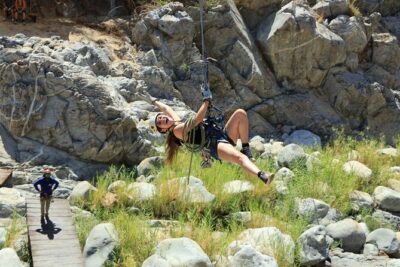 ★ 5.0Cabo classicOutdoor Ziplining and UTV Adventure from Los CabosFrom $1394,181 reviews
 ★ 5.0Books out fastATV Tour, Camel Ride, Tequila Tasting and Mexican Buffet LunchFrom $1493,380 reviews
 ★ 5.0Crowd favouriteCabo Migrino Beach and Desert ATV Tour plus Tequila TastingFrom $752,367 reviews
 ★ 5.0Worth the early startOffRoad 4X4 UTV Adventure with unlimited Lunch & TequilaFrom $1991,870 reviews
 ★ 5.0Easy winPrivate SUV Round-Trip from Airport to Hotels in Cabo San LucasFrom $1801,820 reviews
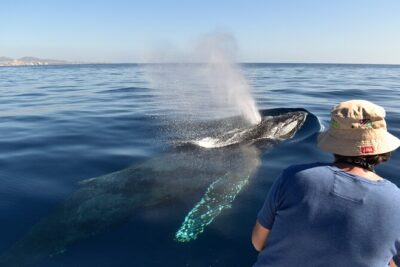 ★ 5.0Traveller favouriteWhale Watching Cabo-Women crew-Sightings Guaranteed & Free PhotosFrom $1001,743 reviews
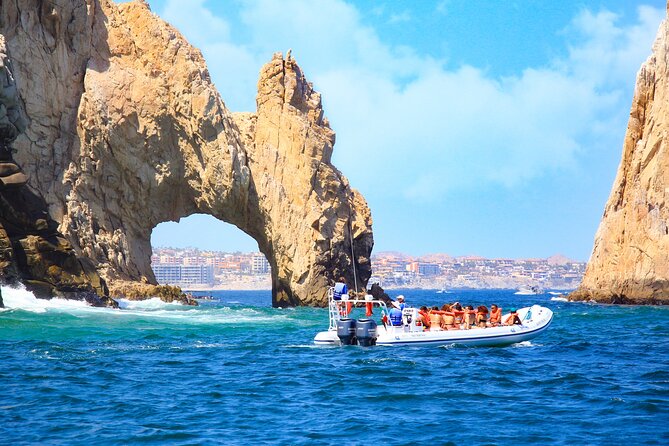
The Arch is a route, not a photo stop.
Leave the marina early, trace the granite headlands past Pelican Rock and Lover’s Beach, then choose whether the day continues in the water, on a clear boat or under sail.
How do you want to see Land’s End?
The same coastline can be a quick look, a swim or a private half-day. Pick the shape of the outing first; the best-reviewed options are already ranked behind it.
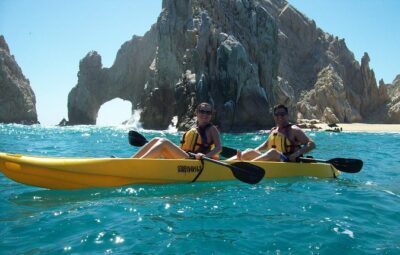 Easy and closeThe clear-boat loop3 hours (approx.) · from $95 · 1,317 reviewsA short marina departure, the Arch and bright water under your feet. Best when time is tight or the group wants the coastline without committing half a day.Compare clear-boat tours →
 Get in the waterThe snorkel day4 hours (approx.) · from $149 · 3,515 reviewsBuild in reef time at Pelican Rock, Chileno or Santa Maria. The better trips leave room to swim instead of racing between photo stops.Find the right snorkel trip →
 Your own paceThe private charter3 hours 30 minutes (approx.) · from $595 · 321 reviewsMore space, a flexible route and the option to linger when the water is good. It costs more, but groups often close the gap once the fare is divided.See private charters →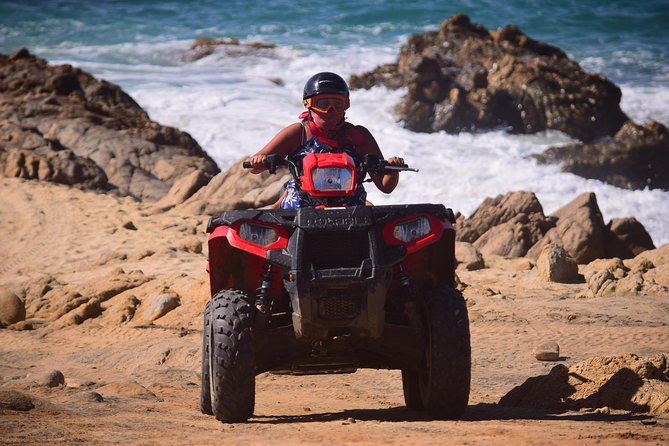
Trade the marina for dust.
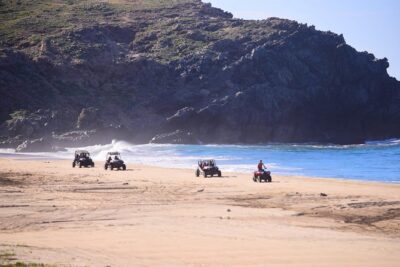
Cactus tracks, dry riverbeds and a final run beside the surf: Cabo’s inland side is rougher, louder and much bigger than the resort corridor suggests.
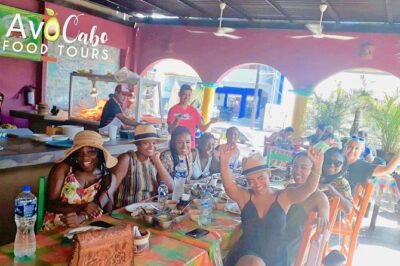
Tacos first. Tequila with context.
Walk beyond the marina for smoky al pastor, seafood tostadas and agave poured by someone who can explain what is in the glass.


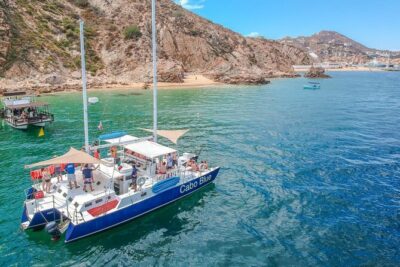
Let the coast do the talking.
A small sailboat, a lively catamaran or a private deck: choose the mood before the vessel, then be outside the harbour when the rocks turn copper.




Two towns, one very long history.
Cabo San Lucas supplies the harbour energy; San José del Cabo slows the pace around its mission, galleries and shaded streets. A good guide joins the two without flattening either.
Choose your stretch of Baja.
Stay close to the Arch, follow the corridor beaches east, cross the peninsula to Todos Santos or give La Paz and Balandra a full day.


Pick the day before the departure time.
Water, wildlife, desert or dinner: every collection below uses live review counts, so the shortlist grows as new reviews publish.






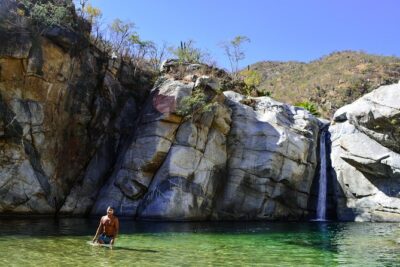
The farther Baja days repay the start.
Balandra’s pale water, Todos Santos’ galleries, Cabo Pulmo’s reef and the oasis canyons near Santiago all sit beyond the quick marina loop.
Three Cabo days, no filler.
Start on the water, spend a day in the desert, then use the third for the wider peninsula. The order can move with wind, whales and your appetite.
Day 1Meet Land’s EndTake the first clear boat or kayak around the Arch, keep the afternoon loose for the beach, then sail back into sunset.Plan the water day →
 Day 2Cross the desertRun a cactus trail to the Pacific in the morning; leave the sand behind and eat your way through town once the heat drops.Pick the adventure →
 Day 3Take the long Baja dayChoose Balandra and Espíritu Santo for water, or Todos Santos for art, history and a slower road back across the peninsula.See the day trips →
The newest Cabo reviews are in.
 ★ 5.02-Hour ATV Riding Experience in San Jose del CaboFrom $1103 reviews
 ★ 4.5Cabo Escape Sunset Cruise with Dinner and Open BarFrom $993 reviews
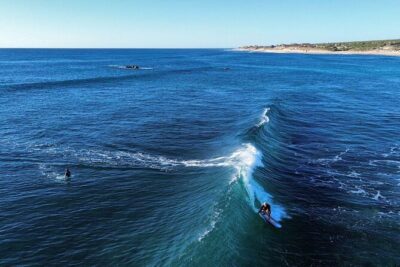 ★ 5.0Private Surf Lesson in Baja, East CapeFrom $2103 reviews
 ★ 4.0One Way Private Transfer from Airport to Cabo San Lucas Area3 reviews
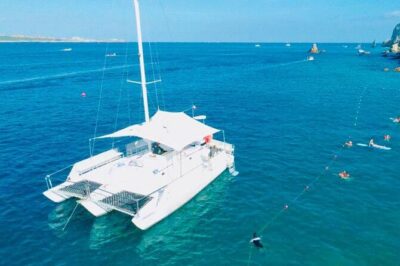 ★ 5.0Snorkel Tour in private Trimarán in Los CabosFrom $1,0173 reviews
 ★ 5.0Private Round Trip by Van from SJC AirportFrom $1803 reviews
 ★ 4.5Romantic Sailboat Sunset: Live Music, Premium Bar & Dinner -CabosFrom $2723 reviews
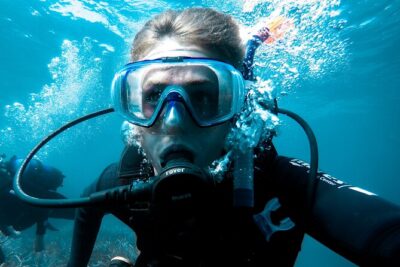 ★ 5.0Whale and Dive Combo Tour in Los CabosFrom $2603 reviews